Things everybody “knows” about tornadoes
Open the windows, hide under a bridge, and rivers keep them away. Gently corrected.
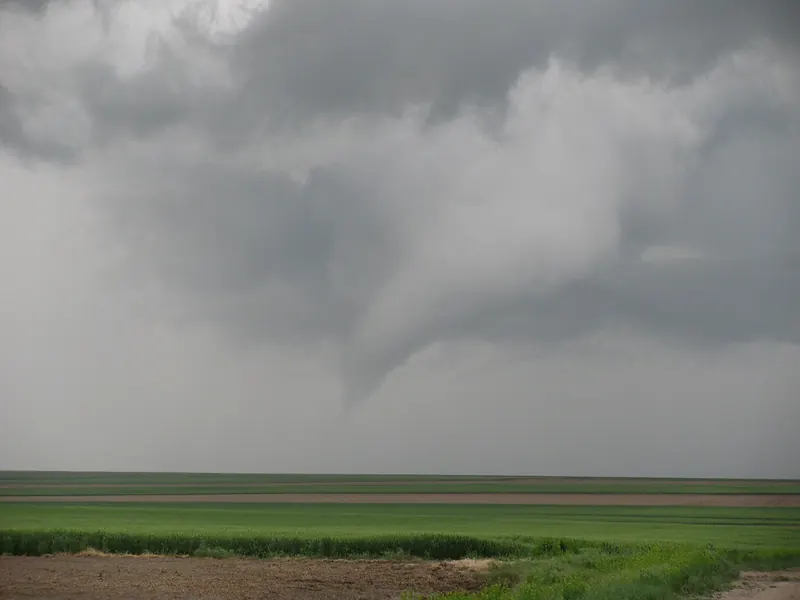
MythTornadoes only happen in America.
FactTornadoes happen in many parts of the world, including Australia, Europe, Africa, Asia and South America. NOAA NSSL: Tornado basics Around 30 tornadoes a year are reported in the UK. Met Office: Tornadoes · checked 31 Oct 2026
MythThe UK doesn’t get tornadoes.
FactAround 30 tornadoes a year are reported in the UK. Met Office: Tornadoes · checked 31 Oct 2026 England has one of the highest tornado densities in the world: about 2.2 tornadoes per 10,000 km² a year, compared with 1.3 in the USA (a University of Manchester study). Met Office blog: Tornadoes in the UK (22 Jul 2025)
MythOpen the windows to equalise the pressure.
FactDon’t open windows to “equalise pressure”. It wastes precious time and you could be hurt by flying glass. NOAA Storm Prediction Center: The online tornado FAQ
MythA motorway bridge is a good place to shelter.
FactNever shelter under a motorway bridge. The wind can speed up there and flying debris is blasted underneath. NOAA Storm Prediction Center: The online tornado FAQ
MythTornadoes can’t cross rivers, hills or valleys.
FactRivers, hills and valleys don’t protect towns. The 1925 Tri-State Tornado crossed the Mississippi River. NOAA Storm Prediction Center: The online tornado FAQ
MythTornadoes avoid big cities.
FactTornadoes don’t avoid city centres; city centres are just small targets. Tall buildings don’t stop tornadoes. NOAA Storm Prediction Center: The online tornado FAQ
MythMobile homes attract tornadoes.
FactMobile homes don’t attract tornadoes. They’re just much easier for wind to damage than well-built houses. NOAA Storm Prediction Center: The online tornado FAQ
MythA big, wide tornado is always the strongest.
Fact“Wedge” and “rope” are storm-spotters’ words for a tornado’s shape. Shape and size don’t tell you how strong a tornado is. NOAA Storm Prediction Center: The online tornado FAQ
MythYou’ll always see a funnel.
FactWind is invisible, so you often only see a tornado when it forms a condensation funnel of water droplets, dust and debris. NOAA NSSL: Tornado basics A tornado can touch the ground without a full funnel. Sometimes the only sign is whirling dust or debris. NOAA NSSL: Tornado basics
MythTornadoes only happen on hot days.
FactTornadoes don’t need a hot day. What matters is how the temperature near the ground compares with the air higher up. NOAA NSSL: Tornado FAQ
MythDust devils are small tornadoes.
FactDust devils are not tornadoes, even though they can do damage. NOAA Education: Tornadoes
MythA “mini tornado” is a different thing.
FactTORRO says “mini tornado” is not a recognised term: a tornado is a tornado, whatever its size. TORRO: Media information
MythScientists know exactly how tornadoes form.
FactScientists say the honest answer to “how do tornadoes form?” is that we don’t fully understand. NOAA NSSL: Tornado basics
MythWe could blow a tornado apart.
FactWe can’t stop tornadoes. Anything powerful enough to break one up would do more damage than the tornado itself. NOAA NSSL: Tornado FAQ