How tornadoes form
Four ingredients make a thunderstorm that can spin. Even then, most never make a tornado, and scientists are still working out why.
The honest answer
Scientists say the honest answer to “how do tornadoes form?” is that we don’t fully understand. NOAA NSSL: Tornado basics
The four ingredients
Forecasters look for four ingredients for tornadic thunderstorms: moisture, instability, lift and wind shear. NOAA Storm Prediction Center: The online tornado FAQ
- Moisture
- Instability: Stage 1, storm development: the Sun heats the ground, warm bubbles of air rise, and in an unstable atmosphere they grow into towering cumulonimbus (thunder) clouds. Met Office: Tornadoes
- Lift: Lift often comes from fronts, drylines and other boundaries between air masses: they push air upwards so storms can start. NOAA Storm Prediction Center: The online tornado FAQ
- Wind shear: Wind shear is when the wind at two different heights blows at different speeds or in different directions. It can start air spinning like a horizontal tube. NOAA NSSL: Types of tornadoes
From a spinning tube to a spinning storm
Rising air in the thunderstorm tilts that spinning tube from horizontal to vertical. NOAA NSSL: Types of tornadoes
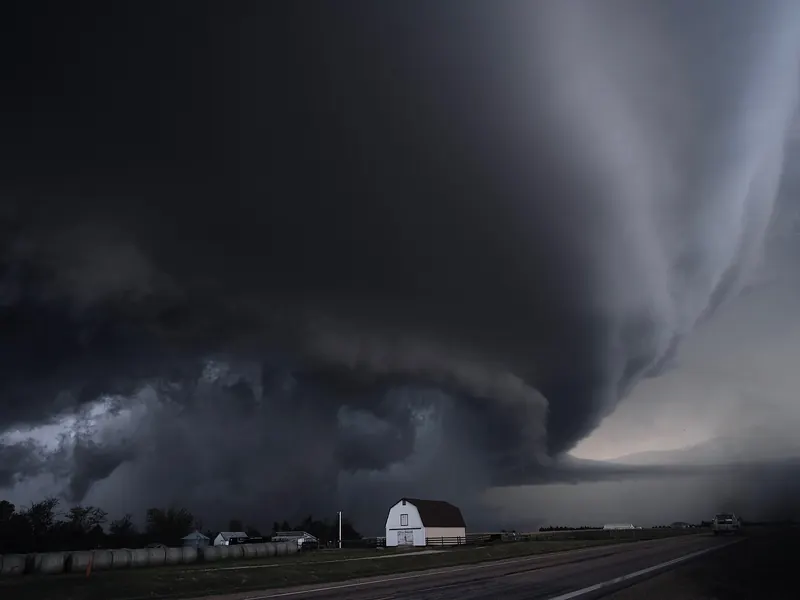
The rotating updraft in a supercell, called a mesocyclone, is usually 2–6 miles across: much bigger than the tornado that may form inside it. NOAA NSSL: Tornado detection
The four stages
The Met Office describes four stages: Met Office: Tornadoes
- Stage 1, storm development: the Sun heats the ground, warm bubbles of air rise, and in an unstable atmosphere they grow into towering cumulonimbus (thunder) clouds. Met Office: Tornadoes
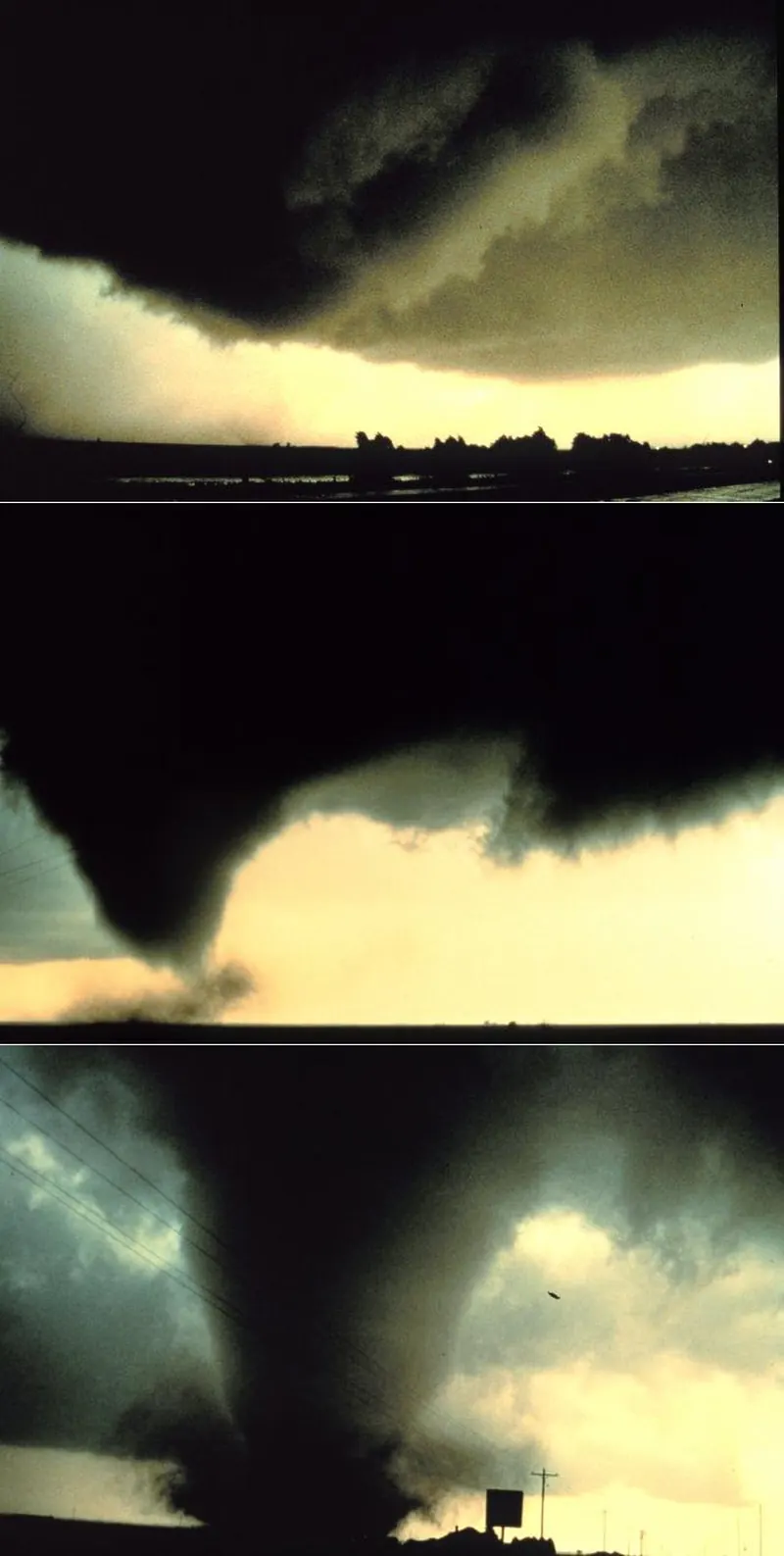
- Stage 2, storm organisation: where winds increase strongly with height, the updraught starts to rotate. Thunderstorms with deep, lasting rotation are called supercells. Met Office: Tornadoes
- Stage 3, tornado formation: downdraughts help bring the rotation lower until a narrow column of violently rotating air reaches the ground. Met Office: Tornadoes
- Stage 4, dissipation: cold downdraughts wrap round the tornado and cut off its warm air. It narrows and dies away. Met Office: Tornadoes
Supercells
Most tornadoes come from supercells: thunderstorms with a rotating updraft. NOAA NSSL: Types of tornadoes As few as 20 per cent of supercell thunderstorms actually produce a tornado. NOAA NSSL: Types of tornadoes
The wall cloud
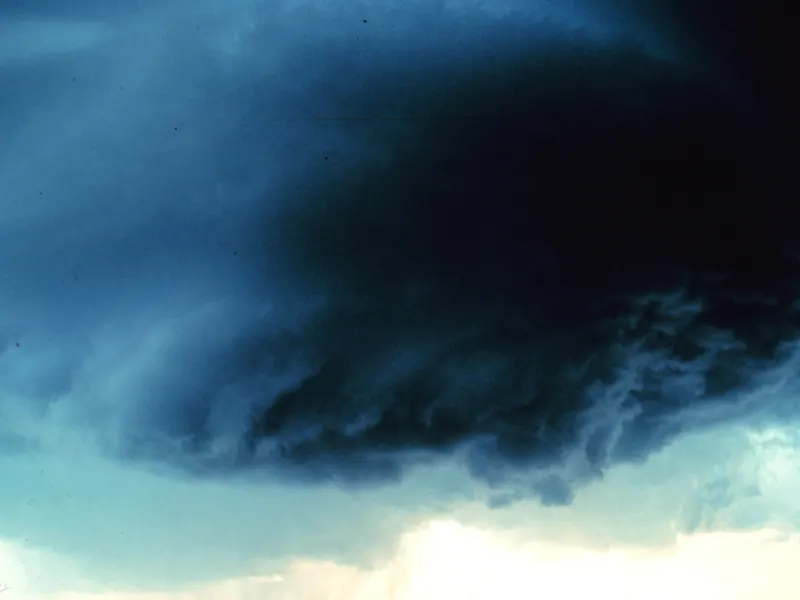
A wall cloud is a lowered patch of cloud under the storm’s rain-free base. One that produces a tornado can be there 10–20 minutes before the tornado appears, but not always. NOAA NSSL: Tornado basics
Some surprises
Tornadoes don’t need a hot day. What matters is how the temperature near the ground compares with the air higher up. NOAA NSSL: Tornado FAQ
A tornado uses only a tiny fraction of a thunderstorm’s energy. It’s dangerous because that energy is squeezed into a small area. NOAA NSSL: Tornado FAQ
A tornado that narrows can spin faster, just as an ice skater spins faster when they pull their arms in. NOAA Storm Prediction Center: The online tornado FAQ